


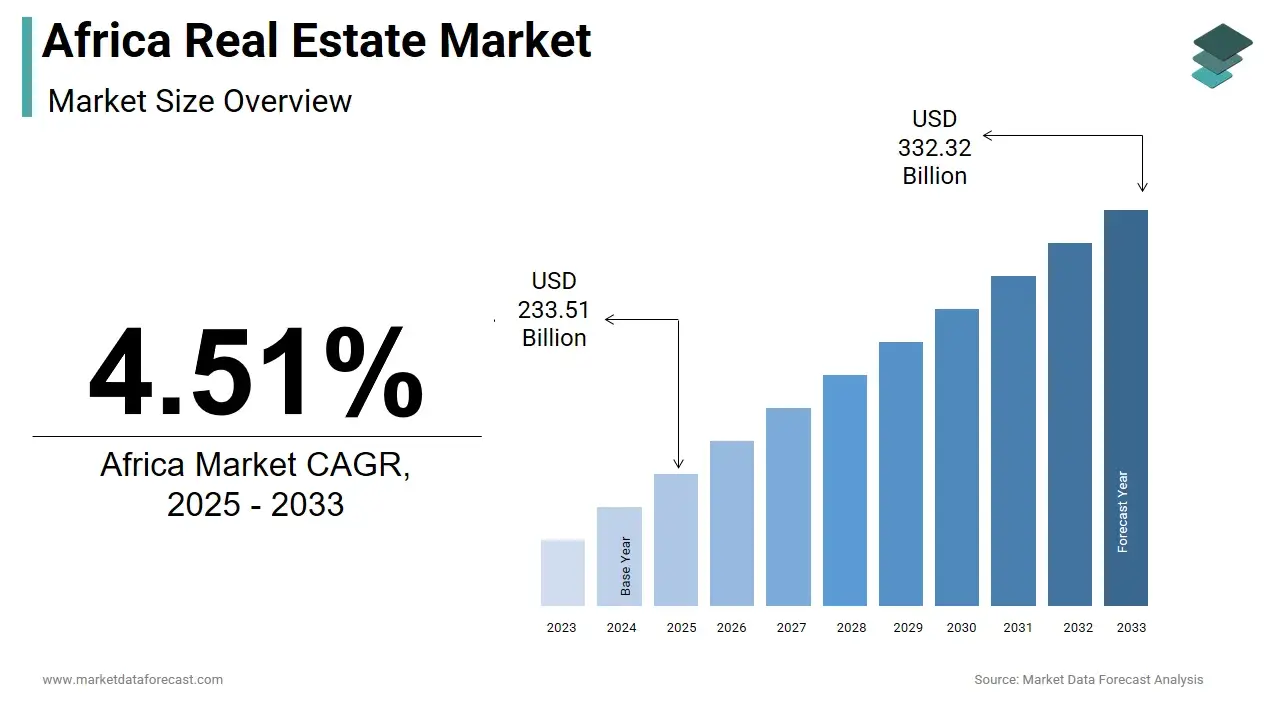
The African real estate market is on a steady growth trajectory, projected to reach USD 332.32 billion by 2033 from USD 233.51 billion in 2025. This represents a compound annual growth rate (CAGR) of 4.51% between 2025 and 2033, reflecting increasing urbanization, infrastructure development, and rising demand for residential, commercial, and industrial properties across the continent.
Understanding Africa’s Real Estate Growth
Africa’s population is rapidly urbanizing, with cities expanding both horizontally and vertically. Key drivers of growth include:
Rising middle-class population seeking modern housing and retail spaces
Infrastructure investments such as roads, airports, and industrial parks
Foreign direct investment, particularly in commercial and mixed-use developments
Government policies supporting property registration, urban planning, and development
Countries like Kenya, Nigeria, South Africa, and emerging markets such as Uganda are benefiting from these trends, attracting both local and international investors.
Implications for Uganda’s Real Estate Market
Uganda, as part of this continental growth story, is experiencing similar trends, particularly in Kampala and secondary cities like Mbarara, Jinja, and Gulu. Urban expansion is transforming peri-urban areas including Gayaza, Nansana, Bweyogerere, and Zana into thriving residential and commercial hubs.
Key opportunities for Uganda include:
Residential Developments: Luxury apartments in high-end neighborhoods like Kololo, Muyenga, and Naguru, alongside mid-range and affordable housing in peri-urban suburbs.
Commercial Growth: Offices, re
tail centers, and industrial warehouses are increasingly demanded in Nakawa, Kyaliwajjala, Namanve, and Lubowa.
Mixed-Use Developments: Combining residential, retail, and office spaces to meet the evolving lifestyle of urban residents.
Comparing Africa to Global Markets
While Africa is growing steadily at a 4.51% CAGR, mature markets like the USA and UK face different challenges:
USA: Rising mortgage rates have slowed residential growth, creating opportunities for investors who understand affordability and long-term demand.
UK: Economic uncertainty and high taxes affect property transactions, particularly in affluent areas.
Uganda’s market, like other African nations, is still emerging, providing higher growth potential and first-mover advantages in new neighborhoods and commercial zones.
Strategic Insights for Investors
Investors can leverage the continent’s projected growth to maximize returns:
Identify Emerging Areas: Focus on rapidly urbanizing suburbs around Kampala and secondary cities.
Diversify Property Types: Mix luxury, mid-range, and affordable units to capture wider demand.
Monitor LULC Changes: Observe land use and land cover transformations for smart property acquisition.
Adopt Technology: Utilize CRM systems, digital marketing, and virtual tours to compete effectively.
Learn from Global Trends: Apply lessons from slower markets to mitigate risks and adapt pricing strategies.
Africa’s real estate sector is on a strong growth path, offering opportunities for developers, investors, and agents. With Uganda’s urbanization, infrastructure improvements, and emerging neighborhoods, the country is well-positioned to benefit from the continental growth trend. Investors who understand market dynamics, leverage technology, and adopt strategic planning can gain significant returns in residential, commercial, and mixed-use developments.



Join The Discussion